86-592-5659128 (to8016)
anna@xmydx.com English
 Deutsch
 español

20 YEARS Silicone manufacturer
86-592-5659128 (to8016)
anna@xmydx.com
20 YEARS Silicone manufacturer



2026-11-06 11:45:13
Short answer: Shore A is the hardness scale used for flexible silicone, tested per ASTM D2240. Most custom silicone parts fall between 30 and 70 Shore A; the practical manufacturing range is roughly 20 to 80 Shore A. Specify hardness with a number and a tolerance (commonly ±5 Shore A) — never with words like "soft" or "firm," because those mean different things to every supplier.
This guide maps each hardness band to real applications, explains what hardness does and does not control, and covers the specification mistakes that cause parts to fail after tooling is cut.
• Shore A measures indentation resistance (ASTM D2240) — not density, tensile strength or durability.
• Most custom parts sit between 30 and 70 Shore A; the practical range is 20–80.
• Always specify a number plus a tolerance, e.g. 50 ±5 Shore A, with the test method.
• Hardness does not determine compression set, tear strength or temperature resistance.
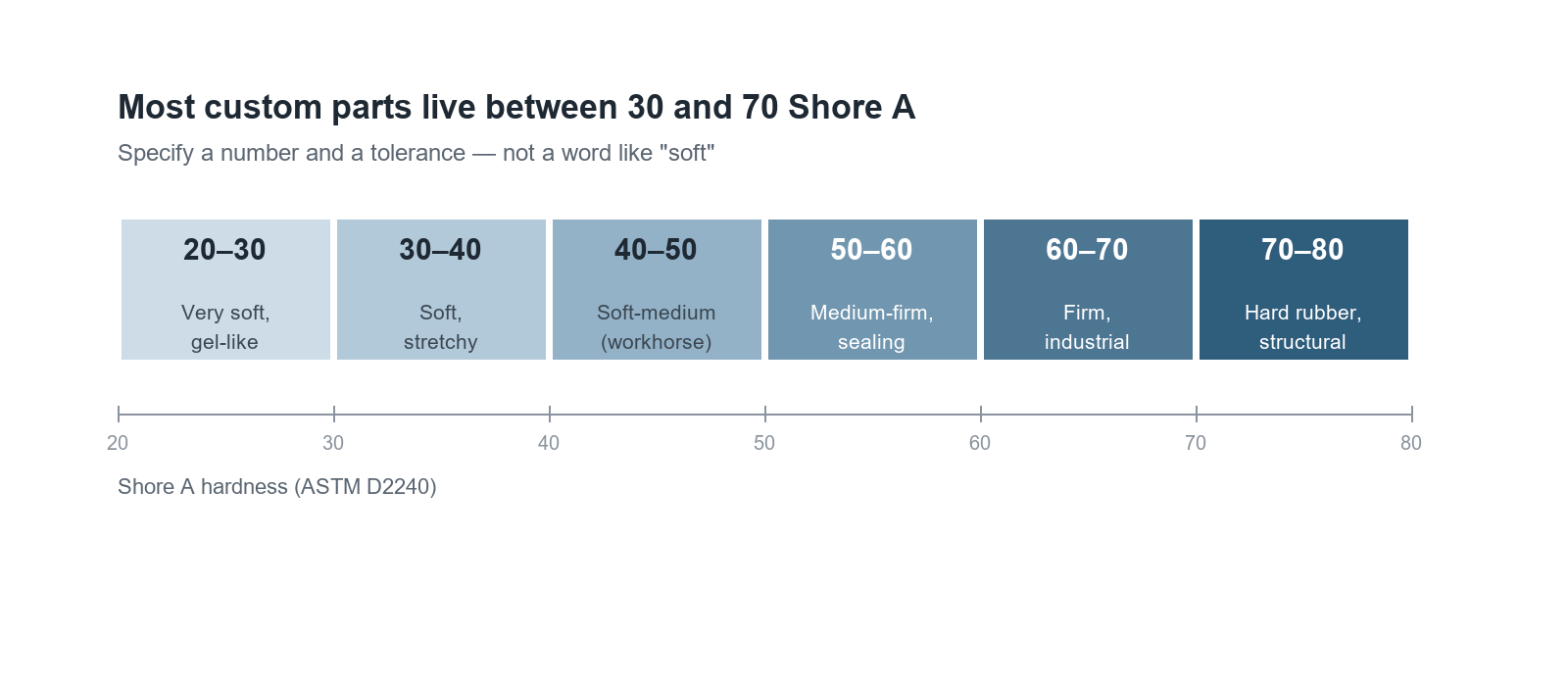
Figure 1. Shore A bands and where most custom parts sit.
Shore A measures resistance to indentation — how far a spring-loaded needle penetrates the material under a defined force. It is not a measure of density, tensile strength, or durability.
Two consequences follow, and both trip up buyers:
1. Two silicones with the same Shore A can behave very differently. One may tear easily; the other may resist tearing but compress permanently. Hardness is one number, not a material specification.
2. Shore A is only valid for flexible materials. Above roughly 90 Shore A, the scale loses resolution and Shore D is used instead. For elastomers, 80 Shore A is already quite hard.
Testing is done per ASTM D2240 on a conditioned specimen, usually with a 1-second or instantaneous reading. The test method matters: a reading taken immediately after molding will differ from one taken after 24 hours of relaxation.
|
Shore A |
Feel |
Typical applications |
Design notes |
|
20–30 |
Very soft, gel-like |
Soft-touch surfaces, cushioning pads, sealing lips on irregular surfaces |
Difficult to demold; prone to tearing at thin walls |
|
30–40 |
Soft, stretchy |
Wearable bands, mask ear loops, soft grips, flexible connectors |
Good conformability; low compression set resistance |
|
40–50 |
Soft-medium |
Silicone keypads, baby products, kitchen utensils, watch straps |
The workhorse band for consumer goods |
|
50–60 |
Medium-firm |
Appliance panels, food molds, protective covers, seals |
Best balance of feel and dimensional stability |
|
60–70 |
Firm |
Industrial keypads, gaskets, O-rings, insulation bushings |
Higher press force; tighter tolerance capability |
|
70–80 |
Hard rubber |
Structural mounts, rollers, high-load seals |
Trim and flash removal get harder; cycle time rises |
If your application is not on this list, pick the band by function: sealing favors 40–60, gripping favors 30–50, structural favors 60–80, and comfort against skin favors 20–40.
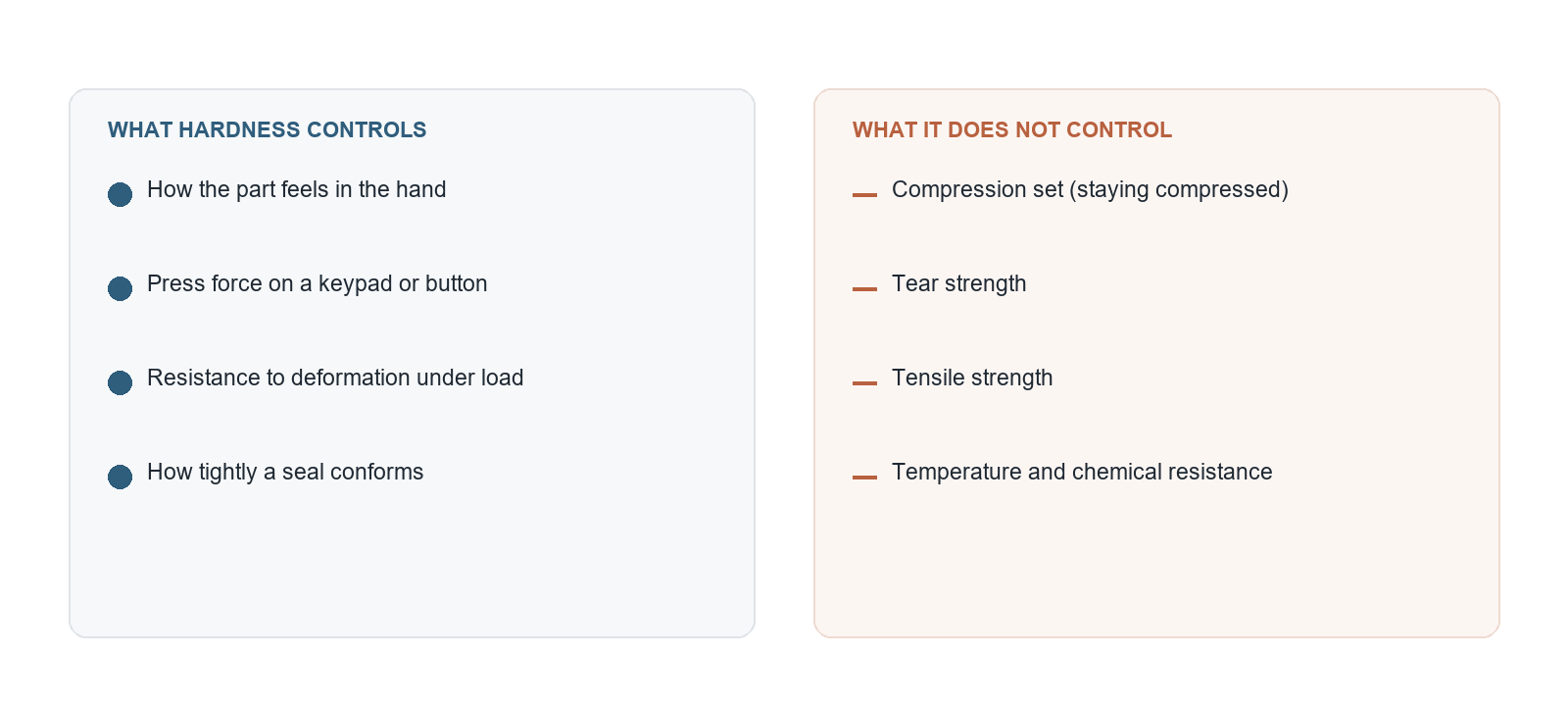
Figure 2. Hardness is one property, not the whole specification.
Hardness does control:
• How the part feels in the hand
• Press force on a keypad or button
• Resistance to deformation under load
• How tightly a seal conforms to a surface
Hardness does not, by itself, control:
• Compression set — the tendency to stay compressed after load is removed. This is driven by compound formulation and post-curing, not hardness alone.
• Tear strength — a 40 Shore A compound can be formulated to tear easily or to resist tearing.
• Tensile strength — largely a function of the base polymer and filler system.
• Temperature range — set by the compound, not the durometer.
• Chemical resistance — set by the polymer and cure system.
This is why a good RFQ specifies hardness plus the properties that matter — for example, "50 ±5 Shore A, compression set under 25% after 22 h at 175 °C, tear resistance suitable for repeated demolding."
Write it as 50 ±5 Shore A. Without a tolerance, a supplier may ship 44 or 56 and still claim compliance.
ASTM D2240 is the standard reference in North America. In Europe, ISO 7619-1 is equivalent in practice. Naming the method removes ambiguity about specimen thickness and reading timing.
Hardness on a thin wall reads differently than on a thick boss. Specify the measurement location, or accept that the number applies to a standard test slab rather than the finished part.
Hardness drifts with temperature. A 50 Shore A part at 23 °C may read noticeably softer at 80 °C. If the part operates hot, say so and ask for the compound's hardness at temperature.
Post-curing removes volatile compounds and stabilizes properties. For food-contact, medical, or high-temperature parts, post-curing is not optional — and it can shift hardness slightly. Ask whether the quoted hardness is before or after post-cure.
1. Specifying hardness by feel. "Like a TV remote button" is not a specification. It becomes one only after someone measures the force.
2. Assuming harder means stronger. Harder compounds are not automatically more durable; they are often more brittle in tear.
3. Ignoring wall thickness. A 0.5 mm wall cannot deliver the same feel as a 2 mm wall at the same hardness. Geometry and hardness work together.
4. Forgetting compression set. A seal that takes a permanent set leaks — even if the hardness is perfect.
5. Not asking for a sample at the specified hardness. Always approve a physical sample, not a datasheet.
A factory producing to a hardness spec should be able to show:
• A calibrated durometer (Type A) with a current calibration record
• A defined sampling frequency per lot (for example, a set number of readings per cavity)
• Readings recorded against the lot number
• Retained samples for dispute resolution
If a supplier cannot describe this process, the hardness number on the drawing is decorative.
What is the softest silicone that can be molded reliably? Around 20 Shore A is practical for simple shapes. Below that, demolding and tear become serious problems, and very thin walls are usually not feasible.
What is the hardest silicone available? Silicone can be formulated to 80 Shore A and beyond, but above 80 the material behaves more like hard rubber and Shore D becomes the more meaningful scale. For most parts, 70–80 is the practical ceiling.
Does higher Shore A mean better wear resistance? Not reliably. Wear resistance depends on the compound's filler system and surface friction, not on durometer alone. A 60 Shore A compound can outperform a 70 Shore A one in abrasion.
Can hardness change after molding? Yes, slightly — during post-curing and over the first 24 hours as the material relaxes. This is why readings taken immediately after demolding are not used for acceptance.
Is Shore A the same as Shore OO? No. Shore OO is used for extremely soft materials (below roughly 20 Shore A), such as gels and foams. They are different scales and are not directly convertible.
How do I convert Shore A to tensile strength? You cannot. There is no reliable conversion. Hardness and tensile strength are independent properties of the compound.
About Xiamen Yidexin Silicone Rubber Industrial Co., Ltd. Yidexin molds custom silicone parts from 20 to 80 Shore A, with in-house hardness verification and retained samples per lot. Founded in 2004 in Xiamen, China, the factory runs 10 production lines and ships over 1,000,000 pcs per month across keypads, OEM parts and silicone watches. Intertek onsite verified in January 2026. MOQ 100–2,000 pcs; sampling 3–7 days. See OEM silicone capabilities or send your drawing.

2F/YISHENG BUILDING,1ST INDUSTRIAL ZONE,DIANQIAN,HULI DISTRICT,XIAMEN CITY,CHINA
86-592-5659128 (to8016)
+86-592-5785493
+86-13850076578
© 2016 XIAMEN YIDEXIN SILICONE RUBBER INDUSTRIAL CO.,LTD All Rights Reserved dyyseo.com
Online Contact
 86-592-5659128 (to8016)
 anna@xmydx.com
 +8613606037597+8613850076578
top