86-592-5659128 (to8016)
anna@xmydx.com English
 Deutsch
 español

20 YEARS Silicone manufacturer
86-592-5659128 (to8016)
anna@xmydx.com
20 YEARS Silicone manufacturer




2026-11-14
Short answer: Silicone is not biodegradable, and it is rarely recycled — most municipal programmes will not take it. Specialist industrial routes exist: shredding into rubber crumb for downcycled applications, and pyrolysis to recover siloxanes and energy. The strongest environmental argument for silicone is not recyclability at all — it is service life. One mat that replaces hundreds of disposable sheets wins on impact long before end-of-life enters the conversation.
This matters commercially, because "eco-friendly silicone" is one of the most common and least defensible claims in houseware.
• Not biodegradable. The silicon-oxygen backbone is what makes silicone stable in an oven, and equally stable in a landfill.
• Recycling exists, but not at kerbside. Industrial shredding and pyrolysis are real; household collection is not.
• Published degradation figures vary enormously — from decades to centuries. Treat any single number as an estimate, not a fact.
• Longevity is the claim you can defend. "Replaces 500 disposable sheets" is measurable; "eco-friendly" is not.
Figure 1. The honest answers are less flattering than the marketing.
Biodegradation depends on micro-organisms being able to break chemical bonds. The silicon-oxygen (Si–O) bond is one of the strongest in common materials — roughly 450 kJ/mol — and micro-organisms have no efficient enzyme for it.
That is the same property that makes silicone useful: it does not break down under heat, UV or time in the way a carbon-backbone plastic does. The durability is the product, and the persistence is the cost.
Three routes, in order of current availability:
1. Mechanical downcycling. Cured silicone can be ground into crumb and used as filler in lower-grade rubber products, playground surfaces or industrial matting. The material loses tensile performance, so it is a downcycle, not a closed loop.
2. Pyrolysis. High-temperature decomposition without oxygen recovers siloxanes and process energy. It is industrially viable but requires scale and specialised plant, which is why it is not a consumer-facing option.
3. Take-back and specialist collectors. A small number of programmes accept silicone kitchenware by mail or at selected depots. Coverage is patchy and usually country-specific.
What does not exist in most places: a kerbside bin that takes silicone. Putting a silicone mat in the plastics recycling stream is more likely to contaminate the batch than to recycle it.
You will see figures ranging from "50 years" to "500 years" for silicone in the environment. The spread is not a scandal — it reflects different test conditions, different formulations and a lot of extrapolation from short studies.
The honest statement for a brand or a buyer is: silicone persists in the environment for decades at minimum, and the exact figure is not well established. Claiming a specific number invites a challenge you cannot win.
Consider a baking mat used twice a week for five years: roughly 500 uses. The comparable single-use alternative is 500 sheets of parchment.
That comparison is where silicone's environmental case is strongest, and it is measurable:
• Material per use drops by an order of magnitude or more
• Waste volume per use drops similarly
• Replacement frequency is the variable that matters most — a mat that fails in six months destroys the calculation
Which is why the quality question and the sustainability question are the same question. A cheap silicone part with high filler content that chalks and cracks after a year is worse for the environment than the disposable it replaced, because it delivered none of the longevity that justified the material.
|
Claim |
Defensible? |
Why |
|
"Reusable, replaces disposable X" |
Yes |
Measurable, specific |
|
"Long service life" |
Yes, with a test |
Needs a defined use cycle |
|
"Not biodegradable" |
Yes |
Honest, and increasingly expected |
|
"Recyclable" |
Only with a named route |
Must state where and how |
|
"Eco-friendly" / "green" |
No |
Vague; regulators in the EU and US have tightened rules on this kind of wording |
|
"Plastic-free" |
No |
Silicone is a synthetic polymer |
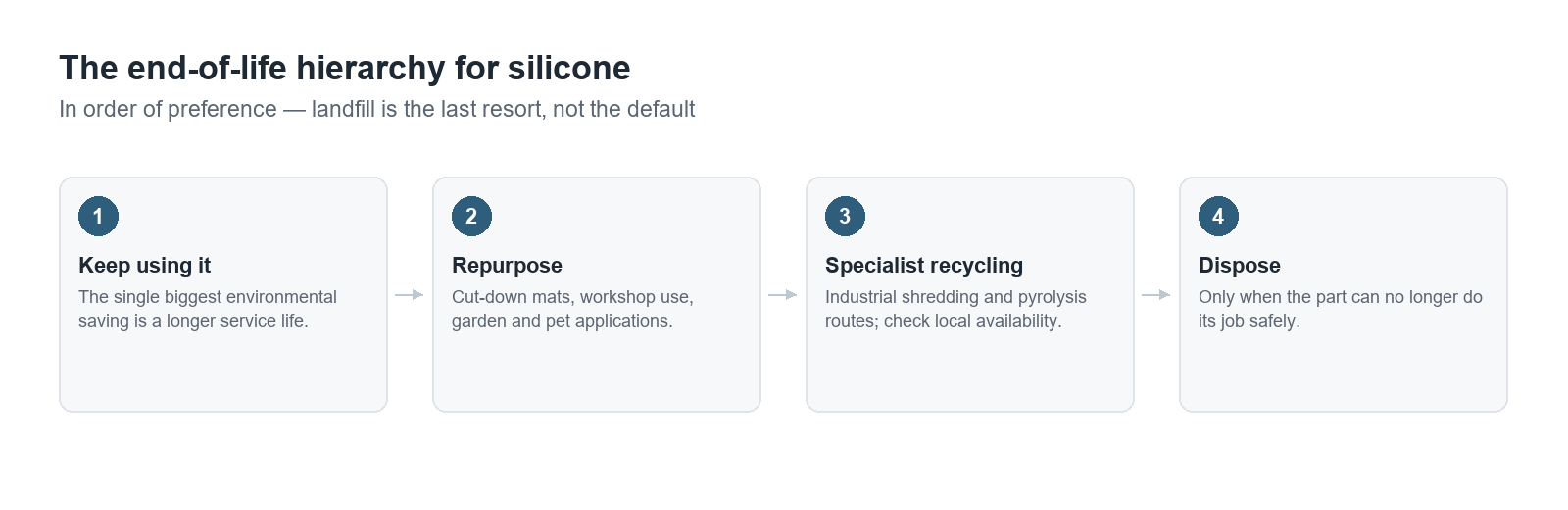
Figure 2. Landfill is the last resort, not the default.
1. Keep using it. The largest saving is a longer service life — nothing else comes close.
2. Repurpose. A worn baking mat becomes a workshop mat, a plant saucer, a pet feeding mat.
3. Specialist recycling. Check for a local industrial or mail-back route before binning it.
4. Dispose. Only when the part can no longer do its job safely — cracked, chalking, or no rebound.
• Do not put "eco-friendly" on the box. In several markets that wording now carries legal risk, and it is the first thing a competitor or a regulator will challenge.
• Build the longevity claim into the specification. A fold-cycle test, a bake-cycle test, a wash-cycle test — those numbers are what let you say "lasts X years" with a straight face.
• State the end-of-life honestly in the packaging or on the product page. "Not recyclable in curbside programmes" reads as credible; silence reads as a cover-up.
• Consider a take-back or repair angle if your market rewards it. For a houseware brand, a returns programme is often a stronger differentiator than a materials claim.
Talk to us about service-life testing if you need cycle data to support a durability claim.
Is silicone biodegradable? No. The silicon-oxygen backbone is not broken down efficiently by micro-organisms, so silicone persists in the environment for decades at minimum.
Can silicone be recycled? Technically yes, through industrial shredding or pyrolysis. In practice, most household recycling programmes do not accept it, and specialist routes are limited.
Is silicone worse than plastic for the environment? Not per use, in most repeated-use applications. It is more energy-intensive to produce but lasts far longer, which usually wins on impact per use. For single-use applications, silicone is the wrong material.
How long does silicone take to decompose? Published estimates range from about 50 to 500 years. The range reflects different formulations and test conditions; treat any single figure as an estimate.
Is "eco-friendly silicone" a legitimate claim? It is too vague to defend and is increasingly restricted. Specific claims — reusable, replaces disposables, tested service life — are both safer and more persuasive.
What should I do with old silicone kitchenware? Keep using it while it is safe, repurpose it when it is not, and look for a specialist recycling route before putting it in general waste.
About Xiamen Yidexin Silicone Rubber Industrial Co., Ltd. Founded in 2004 in Xiamen, China, Yidexin moulds custom silicone houseware, baby products and OEM parts. The factory runs 10 production lines with 50+ QC staff; total staff 109, including 5+ certified engineers. Intertek onsite verified in January 2026. Hardness range 20–80 Shore A; MOQ 100–2,000 pcs; sampling 3–7 days for parts. See household supplies.

2F/YISHENG BUILDING,1ST INDUSTRIAL ZONE,DIANQIAN,HULI DISTRICT,XIAMEN CITY,CHINA
86-592-5659128 (to8016)
+86-592-5785493
+86-13850076578
© 2016 XIAMEN YIDEXIN SILICONE RUBBER INDUSTRIAL CO.,LTD All Rights Reserved dyyseo.com
Online Contact
 86-592-5659128 (to8016)
 anna@xmydx.com
 +8613606037597+8613850076578
top