86-592-5659128 (to8016)
anna@xmydx.com English
 Deutsch
 español

20 YEARS Silicone manufacturer
86-592-5659128 (to8016)
anna@xmydx.com
20 YEARS Silicone manufacturer



2026-11-06 11:25:13
Short answer: Choose LSR (liquid silicone rubber) for high-volume parts that need tight tolerance, clarity, or a short cycle. Choose HCR (high-consistency rubber) when you need better tear strength, compression set, or lower tooling cost at moderate volume. Choose RTV (room-temperature vulcanizing) for prototypes, bridge tooling, and low-volume parts where a cheap open mold makes sense.
The three materials are all silicone. The difference is how they arrive at the factory, and that single fact drives tooling cost, cycle time, and which geometries are even possible.
• LSR wins on volume, tolerance and clarity; HCR on tear strength and compression set; RTV on prototypes and low volume.
• Tooling cost runs highest for LSR, lowest for RTV — the opposite of the per-part labour curve.
• Ask for two processes quoted at two volumes; the crossover point is where the decision lives.
• Freezing a design after LSR tooling is cut is the most expensive mistake in the category.
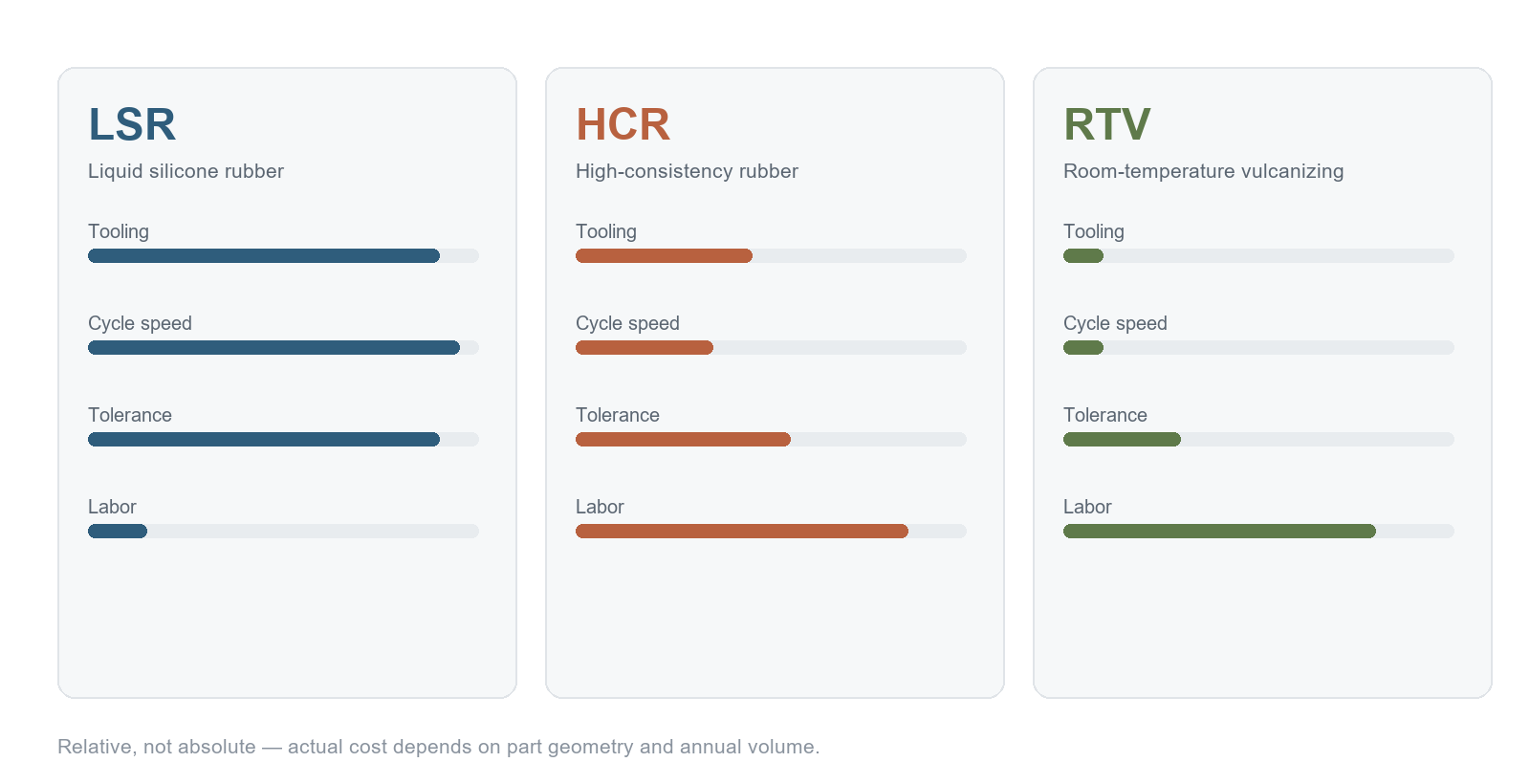
Figure 1. Relative process profile — not absolute cost.
|
|
LSR |
HCR |
RTV |
|
Form |
Two-part liquid, pumped |
Gum-like sheet or strip |
Two-part liquid, poured |
|
Cure |
Platinum addition, heat |
Peroxide or platinum, heat |
Platinum addition, room or elevated temp |
|
Process |
Injection molding |
Compression or transfer molding |
Casting into open molds |
|
Typical viscosity |
Low (pumpable) |
Very high (putty-like) |
Low to medium |
|
Typical hardness |
~10–70 Shore A |
~30–80 Shore A |
~10–60 Shore A |
|
Tooling cost |
Highest (precision steel, cold runner) |
Moderate |
Lowest (often aluminum or resin) |
|
Cycle time |
Seconds to a few minutes |
Minutes |
Hours |
|
Typical volume |
10k–millions |
500–100k |
1–1,000 |
|
Labor per part |
Low |
High (loading, trimming) |
High |
LSR arrives as two low-viscosity components that are metered, mixed, and injected directly into a heated mold. Because the material is pumped rather than cut and placed, LSR runs with very little labor and very consistent shot weight.
Use LSR when:
• Annual volume is high enough to amortize precision tooling
• You need optical clarity or consistent color
• The part has fine detail, thin walls, or tight dimensional tolerance
• You want a short, repeatable cycle and low scrap
• You need a fully enclosed or encapsulated part (LSR overmolding onto plastic or metal)
Watch out for:
• Tooling cost and lead time — LSR tools are precision-machined and typically the most expensive of the three
• Tear strength — standard LSR tears more readily than HCR; specify a tear-resistant grade if the part is demolded aggressively or flexed in use
• Cold runner design — a poorly designed cold runner wastes material and creates flow marks
HCR is the classic silicone rubber — a gum that is compounded, milled, and cut into preforms, then placed into a compression or transfer mold. It is more labor-intensive, but the material itself is tougher and the tooling is cheaper.
Use HCR when:
• You need high tear strength, good compression set, or high elongation
• Volume is moderate and tooling budget is limited
• The part is thick or has a geometry that is hard to fill by injection
• You need a hardness at the upper end (65–80 Shore A)
• The application is a seal, gasket, or O-ring where compression set is critical
Watch out for:
• Labor and consistency — preform weight and placement affect dimensions; operator skill matters
• Flash and trimming — deflashing is a real cost line, especially on complex parts
• Longer cycle — compression molding is slow compared with LSR injection
RTV is a two-part liquid that cures at room temperature (or with mild heat) in an open mold. Tooling can be as simple as a machined aluminum block or a 3D-printed master.
Use RTV when:
• You need 10–200 parts for testing, trade shows, or clinical evaluation
• The design is still changing and hard tooling would be wasted
• The part is large and would need an expensive steel tool
• You are encapsulating electronics or potting a component
Watch out for:
• Property limits — RTV compounds generally have lower tear strength and higher compression set than HCR
• Dimensional consistency — open-mold casting holds looser tolerance
• Not a production process — costs do not scale down; at volume, RTV becomes the expensive option
Answer these four questions in order:
1. Is the annual volume above ~10,000 pcs?
Yes → evaluate LSR. No → evaluate HCR or RTV.
1. Does the part need clarity, thin walls, or tight tolerance?
Yes → LSR is usually the only process that holds it.
1. Is tear strength or compression set the critical property?
Yes → HCR is the safer starting point.
1. Is the design still changing, or is the quantity under ~200?
Yes → RTV, and plan the transition to HCR or LSR once the design freezes.
A useful rule: RTV proves the design, HCR proves the material, LSR proves the volume.
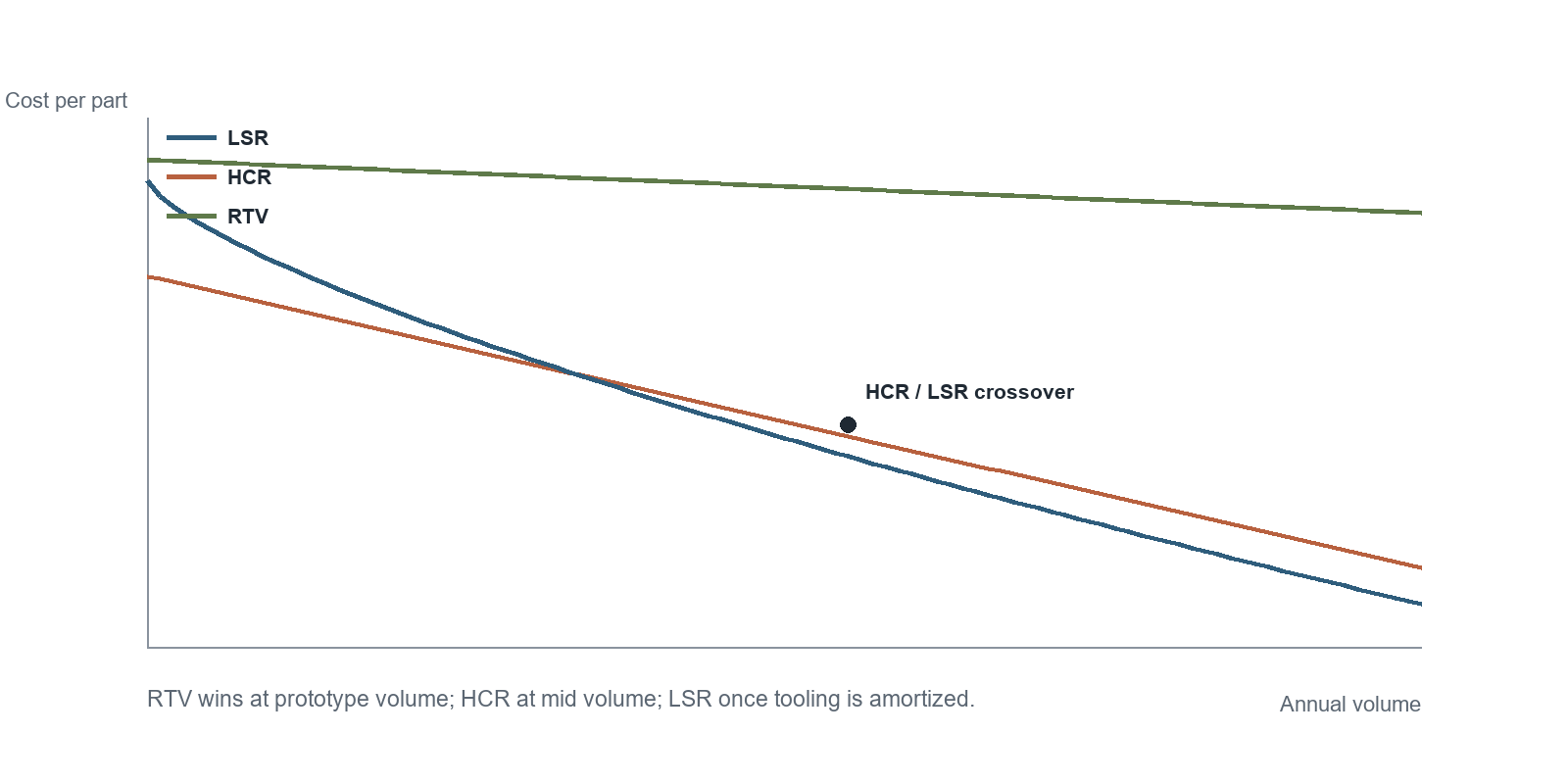
Figure 2. The crossover between processes moves with volume.
The most expensive error is tooling for LSR before the design is frozen. LSR tools are precise and expensive; a change after the tool is cut often means a new tool, not a modification.
The second most expensive error is the reverse: running a 200,000 pcs program on compression molding to save tooling cost. The labor and cycle penalty usually exceeds the tooling saving within the first year.
Ask your manufacturer to quote two processes at two volumes — for example, HCR at 5,000 pcs and LSR at 50,000 pcs. The crossover point is where the decision actually lives.
Can the same part be made in all three processes? Often yes, but not at the same cost or tolerance. A part designed for LSR may not fill properly in a compression mold, and a part designed for RTV may not demold from a steel tool.
Which process gives the best surface finish? LSR typically delivers the most consistent surface because the mold is precision-machined and the material is injected under controlled pressure. HCR finish depends heavily on mold condition and deflashing.
Is LSR more expensive per part? At low volume, yes — tooling dominates. At high volume, LSR is usually the cheapest per part because labor and cycle time are much lower.
Can you overmold silicone onto plastic or metal? Yes, primarily with LSR, which bonds to prepared substrates during injection. This is common for grips, sealed connectors, and keypads with a plastic housing.
How do I choose hardness across processes? Hardness is independent of process within each material's range, but the achievable range differs: HCR reaches higher hardness more easily, while LSR and RTV are better at the soft end.
What about compression set? HCR generally offers better compression set than standard LSR or RTV, which is why seals and gaskets are often compression molded.
About Xiamen Yidexin Silicone Rubber Industrial Co., Ltd. Yidexin produces custom silicone and rubber parts across compression and injection processes, from 20 to 80 Shore A. Founded in 2004 in Xiamen, China, the factory runs 10 production lines with 50+ QC staff and a monthly capacity of over 1,000,000 pcs. Intertek onsite verified in January 2026. MOQ 100–2,000 pcs; sampling 3–7 days for parts. See OEM silicone and rubber capabilities or ask for a process recommendation.

2F/YISHENG BUILDING,1ST INDUSTRIAL ZONE,DIANQIAN,HULI DISTRICT,XIAMEN CITY,CHINA
86-592-5659128 (to8016)
+86-592-5785493
+86-13850076578
© 2016 XIAMEN YIDEXIN SILICONE RUBBER INDUSTRIAL CO.,LTD All Rights Reserved dyyseo.com
Online Contact
 86-592-5659128 (to8016)
 anna@xmydx.com
 +8613606037597+8613850076578
top