86-592-5659128 (to8016)
anna@xmydx.com English
 Deutsch
 español

20 YEARS Silicone manufacturer
86-592-5659128 (to8016)
anna@xmydx.com
20 YEARS Silicone manufacturer



2026-11-06
Short answer: A custom silicone oven mitt typically samples in 3–7 days and produces in 5–30 days, with MOQ from 100–2,000 pcs per colour and per size. The critical misunderstanding in this category is simple: the silicone is not the insulation. Heat protection comes from the lining; the silicone provides grip and spill resistance. Specify the lining and test the seam, or the mitt will pass inspection and still burn someone.
This guide covers how mitts are built, which construction matches which price point, what the heat claim actually requires, and where the cost sits.
• The lining is the thermal barrier. A thick silicone shell over a thin liner protects less than a thin shell over a proper quilted lining.
• The seam and the cuff are the weak points. Heat leaks at the seam; a short cuff is the most common safety complaint.
• Silicone earns its price when the hand is wet. Dry grip is easy; wet and greasy grip is the reason to use silicone at all.
• "Heat resistant to 250 °C" is a test result, not a material property. Ask for the test method and the time at temperature.
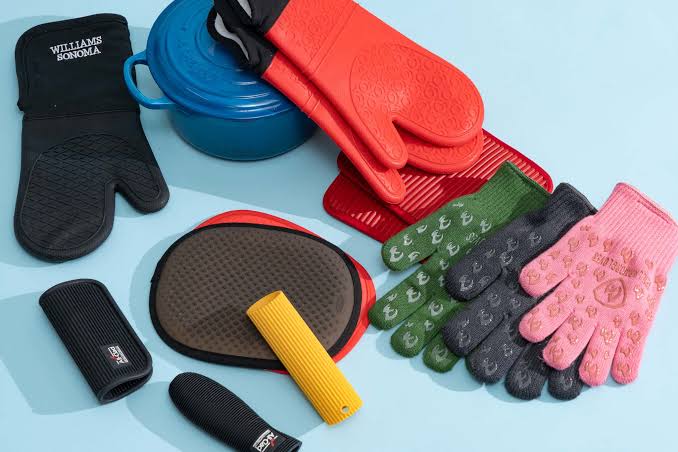
Figure 1. Four zones — only one of them is insulation.
The category grew because silicone solves two problems that fabric mitts never solved: it grips when wet, and it does not absorb sauce. A cotton mitt that has been near a stock pot becomes a heat transfer device; a silicone-gripped one does not.
The failures are equally predictable:
• Thin lining. The shell looks substantial, the inside is a single layer of cotton, and the user feels heat within seconds.
• Short cuff. The wrist is exposed when reaching into a deep oven — the most common complaint in reviews.
• Seam failure. Heat and load concentrate at the seam between thumb and palm.
• Grip that only works dry. A pattern that is too shallow or too glossy loses grip exactly when it is needed.
None of these show up in a visual inspection. All of them show up in testing.
|
Construction |
How it is made |
Insulation |
Best for |
|
Dipped shell over a knitted liner |
Liner dipped or coated in silicone; shell bonded to the liner |
Good — liner thickness is controllable |
Mid-market retail, the volume format |
|
Silicone grip print on a quilted mitt |
Quilted fabric mitt with a printed silicone pattern |
Best — full quilted body plus grip zones |
Premium retail, professional kitchen |
|
Fully moulded silicone mitt |
Single moulded part, no fabric liner |
Limited — short contact only |
Promotional, BBQ, low-cost lines |
The fully moulded mitt is the one that generates safety complaints, because it looks like the most protective option and is usually the least. If you sell it, state the contact time and temperature on the packaging, and do not let the photography imply oven-to-table use.
Heat resistance in this category is measured two different ways, and they are not interchangeable:
• Contact heat — the mitt pressed against a hot surface, measuring how long until the inside surface reaches a threshold temperature.
• Ambient / convective heat — the mitt in a hot oven environment, which tests the lining and the cuff rather than the shell.
A supplier quoting one number without saying which test it came from is quoting marketing. For retail in Europe, mitts are often assessed against the contact-heat levels in EN 407; in the US there is no single mandatory standard for oven mitts, so the test method has to be written into the specification.
Practical approach: define the test, define the duration, and put both on the packaging. "Contact heat: 250 °C for 15 seconds" is a claim a customer can evaluate. "Heat resistant" is not.
Number of layers, fabric weight and whether there is a thermal barrier film. This is the specification that determines whether the product works.
Measure from the wrist opening to the hem. A short cuff is cheaper and is the first thing to extend when reviews turn negative.
Test both. Wet grip is the differentiator, and it depends on pattern depth and compound hardness — typically a softer compound for grip, harder for durability.
Pull test at the thumb crotch and the cuff join. Heat plus load is the real-world condition.
Silicone survives washing; the lining may not. State the wash cycle the mitt is rated for, and test it — a mitt that delaminates after ten washes is a return.
If the shell touches food directly — lifting a chicken, holding a hot pan with food in it — the shell needs a food-contact declaration. This is frequently missed.
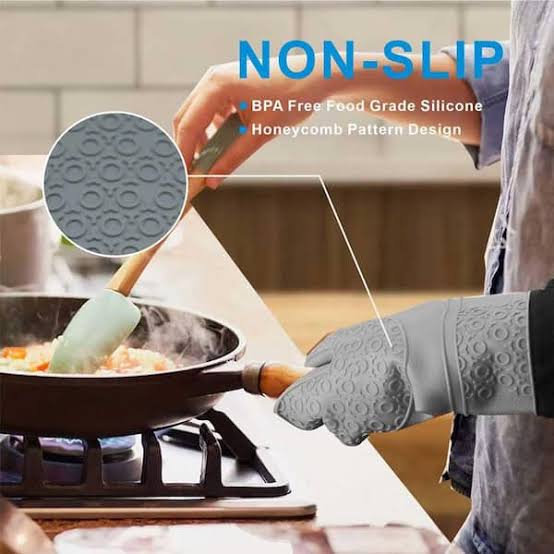
Figure 2. Four tests that predict returns better than a visual inspection.
1. Contact heat — at the rated temperature, measured at the inner surface
2. Steam and spill — hot liquid over the shell, check lining penetration
3. Grip retention — wet and dry, on a smooth and a textured surface
4. Flex fatigue — repeated squeezing at temperature, inspect for cracking
5. Seam pull — thumb crotch and cuff
6. Wash cycle — defined number of cycles, then re-test grip and delamination
• Lining — layers and fabric weight are the main cost and the main performance lever
• Construction — a printed grip on a quilted mitt costs more than a dipped shell
• Pattern tooling — grip patterns need a tool, and a new pattern is a new tool
• Cuff length — more material, more sewing
• Colour — silicone colour changes carry a minimum run
• Order quantity — below about 2,000 pcs, tooling and sewing set-up dominate
A mitt quoted well below the market is almost always a thinner lining, a shorter cuff, or both. Those are the two places a factory can remove cost without changing how the product looks in a photo.
What is the MOQ for custom silicone oven mitts? MOQ typically runs from 100 to 2,000 pcs per colour and per size. Printed grip patterns and custom packaging raise the minimum because they add tooling and set-up.
How long does sampling take? Sampling is 3–7 days for silicone parts; a sewn construction with a printed grip usually needs a second round for fit. Production runs 5–30 days.
How heat resistant are silicone oven mitts? It depends on the lining and the test method, not on the silicone alone. Define contact temperature and duration, and require a test report against that definition.
Are they safe for deep fryers or open flame? No. Silicone mitts are for contact heat and oven use. Open flame and hot oil immersion need a different product and a different claim.
Can the mitt go in a washing machine? The silicone can; the lining may not survive repeated washing. State the rated wash cycle and test it before making the claim.
Can you print a logo on the shell? Yes — embossed into the mould or printed on the surface. Embossing is more durable and needs to be designed into the tool from the start.
About Xiamen Yidexin Silicone Rubber Industrial Co., Ltd. Founded in 2004 in Xiamen, China, Yidexin moulds custom silicone houseware, baby products and OEM parts. The factory runs 10 production lines with 50+ QC staff; total staff 109, including 5+ certified engineers. Intertek onsite verified in January 2026. Hardness range 20–80 Shore A; MOQ 100–2,000 pcs; sampling 3–7 days for parts. See household supplies or send your drawing.

2F/YISHENG BUILDING,1ST INDUSTRIAL ZONE,DIANQIAN,HULI DISTRICT,XIAMEN CITY,CHINA
86-592-5659128 (to8016)
+86-592-5785493
+86-13850076578
© 2016 XIAMEN YIDEXIN SILICONE RUBBER INDUSTRIAL CO.,LTD All Rights Reserved dyyseo.com
Online Contact
 86-592-5659128 (to8016)
 anna@xmydx.com
 +8613606037597+8613850076578
top